

The soccer ball is the most recognizable piece of equipment in the world’s most popular sport. From neighborhood playgrounds and school grounds to professional stadiums filled with thousands of fans, the ball remains the center of every match. Its design may seem simple at first glance, but modern technology has transformed it into a highly engineered product that influences player performance, ball control, speed, and accuracy.
Over the years, the soccer ball has evolved dramatically. Early versions were made from animal bladders and leather, while today’s balls feature advanced synthetic materials, precision stitching, and aerodynamic panel designs. These developments have improved durability, consistency, and overall playing experience for athletes at every level.
As soccer continues to grow globally, manufacturers constantly innovate to create better products that meet professional standards while remaining accessible to recreational players. Understanding the features, types, and construction of a soccer ball can help players, coaches, and enthusiasts make informed decisions when choosing the right ball for training or competition.
The History of the Soccer Ball
The journey of the soccer ball dates back centuries. Ancient civilizations used various round objects for kicking games, but the modern ball began taking shape during the nineteenth century when standardized soccer rules emerged. Early balls were made from leather and often featured laces that could affect movement and player comfort.
As the sport expanded internationally, manufacturers sought ways to improve performance. Synthetic materials gradually replaced traditional leather because they resisted water absorption and maintained their shape more effectively. By the late twentieth century, technological advancements allowed companies to create lighter, more consistent balls that performed reliably in different weather conditions.
Today, every major tournament showcases cutting-edge designs developed through extensive testing. Professional organizations require strict standards for weight, circumference, bounce, and shape retention, ensuring fairness and consistency across competitions worldwide.
Understanding the Construction of a Soccer Ball
A modern soccer ball consists of multiple layers working together to deliver optimal performance. While designs vary between manufacturers, most high-quality balls share several core components.
Outer Cover
The outer cover is the visible surface of the ball. Most modern covers are made from polyurethane or similar synthetic materials. These materials provide durability while maintaining a soft touch, helping players control passes, shots, and dribbles more effectively.
Advanced texturing on the outer surface can also improve grip and aerodynamics. This is particularly important in professional matches where precision and predictability are essential.
Panels and Stitching
Traditional designs used 32 panels stitched together to create a near-perfect sphere. Modern manufacturing techniques now allow fewer panels with thermally bonded seams, reducing water absorption and improving flight stability.
The arrangement and shape of panels significantly influence how a soccer ball moves through the air. Engineers carefully test panel configurations to achieve the desired balance between speed, curve, and control.
Inner Lining and Bladder
Beneath the outer cover lies the lining, which helps maintain structure and responsiveness. The bladder, located at the center, holds air and determines how well the ball retains pressure.
Latex bladders generally provide a softer feel but require more frequent inflation. Butyl bladders retain air longer and are commonly used in training and recreational balls.
Soccer Ball Sizes and Their Uses
Choosing the correct size is essential for skill development and safe play. Different age groups use different ball sizes to match their physical abilities and playing requirements.
| Size | Circumference | Recommended Age Group | Common Use |
|---|---|---|---|
| Size 1 | Mini Ball | All Ages | Skill practice and souvenirs |
| Size 3 | 23–24 inches | Under 8 Years | Youth training |
| Size 4 | 25–26 inches | Ages 8–12 | Junior matches |
| Size 5 | 27–28 inches | Ages 13 and Above | Official matches |
A properly sized soccer ball helps players develop better technique, passing accuracy, and ball control. Youth players especially benefit from using age-appropriate equipment during their developmental years.
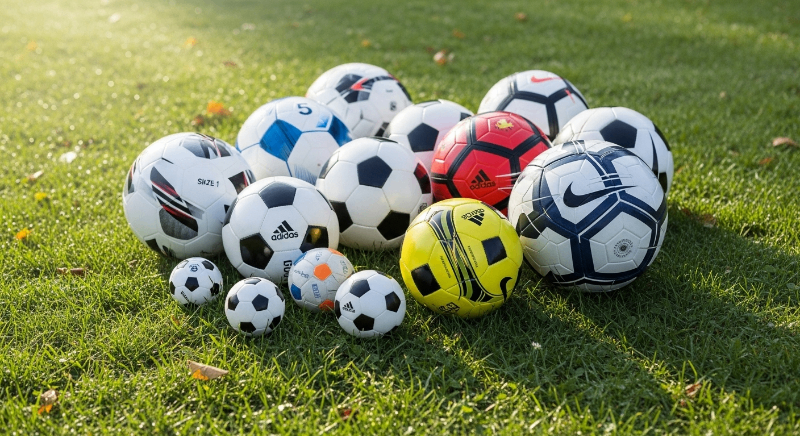
Types of Soccer Balls
Different playing environments require different ball designs. Manufacturers produce specialized options tailored to specific needs.
Match Balls
Match balls are designed for competitive games and must meet official standards. They feature premium materials, advanced aerodynamics, and precise construction methods. Professional leagues and international tournaments typically use top-tier match balls.
Training Balls
Training balls prioritize durability and value. Since they endure repeated use during practice sessions, they are built with stronger materials that can withstand constant kicking and rough playing surfaces.
Futsal Balls
Futsal is played on smaller indoor courts and requires a ball with reduced bounce. These balls help players maintain close control and encourage quick passing in confined spaces.
Indoor Soccer Balls
Indoor soccer balls feature specialized covers designed to minimize damage to gym floors and indoor surfaces. They often provide enhanced grip and predictable movement.
Key Features to Consider When Buying a Soccer Ball
When selecting a soccer ball, several factors should influence your decision. Understanding these features can help ensure you choose a product that matches your needs and budget.
Important considerations include:
- Material quality and durability
- Intended playing surface
- Age and skill level of players
- Air retention capability
- Certification for official matches
A premium product may be worthwhile for competitive players, while recreational users often find mid-range options sufficient for regular play.
Modern Technology in Soccer Ball Design
Innovation continues to reshape how manufacturers design sports equipment. Today’s soccer ball benefits from sophisticated engineering methods that improve consistency and performance.
Thermal bonding technology has become increasingly popular because it eliminates traditional stitching. This process creates smoother surfaces and minimizes water absorption during wet conditions. Players often notice more predictable flight paths and improved accuracy as a result.
Advanced aerodynamic testing also plays a major role in modern development. Engineers use wind tunnels and computer simulations to analyze how different panel shapes affect movement through the air. These insights help create balls that perform consistently at various speeds and weather conditions.
Sustainability has emerged as another important focus. Many companies are exploring environmentally friendly materials and manufacturing processes that reduce waste while maintaining professional-level quality. As consumers become more environmentally conscious, sustainable production methods are likely to become even more common.
How to Maintain a Soccer Ball
Proper maintenance extends the lifespan of any soccer ball and preserves its performance characteristics. Even high-quality products require regular care to remain in good condition.
Players should maintain the recommended air pressure specified by the manufacturer. Overinflation can damage seams and affect control, while underinflation may reduce responsiveness and alter bounce characteristics.
Storage conditions also matter. Extreme heat or prolonged exposure to direct sunlight can weaken materials over time. Keeping the ball in a cool, dry place helps preserve its shape and durability.
Simple maintenance tips include:
- Check air pressure regularly
- Clean dirt after use
- Store away from extreme temperatures
- Avoid sharp surfaces
- Inspect for wear and damage
Consistent maintenance ensures reliable performance and reduces the need for frequent replacements.
The Role of the Soccer Ball in Player Development
The soccer ball is more than just equipment; it serves as a critical tool for learning and improving skills. Young players develop coordination, balance, and technique through repeated interaction with the ball. Every pass, touch, and shot contributes to their overall growth as athletes.
Professional coaches often emphasize ball mastery exercises because technical ability forms the foundation of successful soccer performance. Dribbling drills, juggling routines, and passing exercises help players build confidence and familiarity with ball movement.
As skill levels increase, players become more sensitive to differences in weight, texture, and responsiveness. This is why competitive athletes often prefer high-quality products that offer predictable behavior during training and matches.
The Future of Soccer Ball Technology
The future of the soccer ball looks increasingly innovative. Smart technology is beginning to influence sports equipment, with some advanced balls incorporating sensors that track speed, spin, trajectory, and impact data. These features provide valuable insights for players, coaches, and analysts.
Artificial intelligence and data analytics may further enhance product development. Manufacturers can use collected performance data to refine designs and create balls optimized for different playing conditions.
In addition, sustainable manufacturing practices are expected to expand significantly. Recycled materials, eco-friendly production methods, and reduced carbon footprints are becoming priorities across the sporting goods industry. Future products will likely combine high performance with greater environmental responsibility.
FAQs
What is the standard size soccer ball used in professional matches?
Professional competitions use a Size 5 soccer ball. It has a circumference of approximately 27 to 28 inches and meets official regulations established by governing bodies for competitive play.
How often should a soccer ball be inflated?
The frequency depends on the bladder type and usage. Many players check air pressure before each training session or match to ensure optimal performance and consistent ball behavior.
What material is commonly used in modern soccer balls?
Most modern balls use synthetic materials such as polyurethane. These materials provide durability, water resistance, and improved touch compared to traditional leather designs.
Can a soccer ball be used on all surfaces?
Some balls are designed specifically for grass, turf, indoor courts, or futsal environments. Using the appropriate ball for the playing surface helps maintain performance and extends product lifespan.
Why do professional soccer balls have different panel designs?
Panel designs affect aerodynamics, flight stability, and overall ball control. Manufacturers experiment with different configurations to optimize performance and consistency during matches.
How long does a quality soccer ball typically last?
The lifespan varies depending on usage frequency, playing surface, and maintenance. A well-maintained high-quality ball can remain in good condition for several seasons of regular play.
Conclusion
The soccer ball has undergone remarkable transformation from its early origins to the technologically advanced designs used today. Modern materials, innovative construction methods, and aerodynamic engineering have significantly improved performance, durability, and consistency. Whether used for recreational games, youth development, training sessions, or professional competitions, the right ball can greatly enhance the playing experience.
Understanding the different sizes, types, features, and maintenance requirements allows players and coaches to make informed decisions. As technology and sustainability continue shaping the sporting goods industry, the future of the soccer ball promises even greater advancements that will benefit athletes around the world while preserving the essence of the beautiful game.
Read More:-Reddit Soccer Streams: How Fans Watch Football Matches Online
